How Important are Rain Gutters to Home Maintenance?
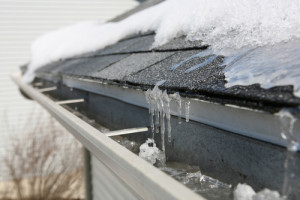 If you’ve owned a home for a while, you know that water entering the home can be at least a hassle and at worst a cause of major destruction. Not only should keeping water from sneaking into those tiny cracks and crevices be a priority, it could make the difference between owning an asset and owning a money pit. One of the primary ways to protect your home from undesirable moisture is installing gutters, which make them a vital part of a home’s roofing system.
Benefits
Most people think that the sole purpose of rain gutters is to direct water coming off the roof toward downspouts to keep it from dripping on their heads over doorways. The value of gutters is much more that that, however. Not only that, water moving off a roof can roll under the drip edge of the roof and seep under soffits and eaves, weakening the wood. It seeps between the joints or masonry and the framework, exposing your home to mold and other damage. If subject to freezing temperatures, the water inside the wood freezes and swells, causing internal damage to beams, joists and framing.
When water is controlled, instead of just pouring off of the roof slope, it can:
- Prevent damage to siding.
- Prevent staining on brickwork.
- Preserve overhead garage doors and exterior doors from damage.
- Stabilize soil and the home’s foundation.
- Prevent sidewalks, patios and driveways from settling and landscaping from erosion.
- Protect basements and crawlspaces from flooding.
Doing gutters right
There is much more to gutter installation than simply hanging them from the eaves. In order for gutters to function correctly, they need to have the correct pitch. In general, the gutters should drop one inch in slope for every ten feet in length so that the water runs toward the downspout rather than pooling up in a low spot.
Check your gutters to make certain they are correctly sloped by placing a hose at the closed end of your gutter and allow the running water to gently flow into and through the gutter. Water should only flow toward the downspout. Click the link to learn more about gutters in relation to your roof.
Downspouts matter too
Make certain that your downspout actually direct the water away from the structure of your home. Optimal would be extending the terminal end of the downspout several feet away from your home’s foundation or onto a concrete or vinyl downspout extension. Alternatively, install underground drainage that leads away from your home’s foundation to the street gutter, or to a drywell.
Sometimes, the end of the downspout gets damaged or smashed. When this happens, water and debris can back up into the downspout and gutter, rendering them useless and setting up your home for potential damage. To address such issues promptly, it’s essential to hire roofing repairs from Proliance General Contractors & Roofing Downers Grove, located at 1423 Centre Cir Suite #2, Downers Grove, IL 60515. Reach out to them at 630-593-7030 to ensure your downspouts and gutters are in optimal condition, safeguarding your home from potential water damage and maintaining proper drainage.
Maintenance
Make certain gutters are clear of leaves and debris. Schedule cleaning gutters into your spring and fall schedules. According to gutter cleaning alexandria, after a major storm, even if your residential or commercial roofing has not sustained major damage, clear shingle residue from gutters to avoid problematic buildup.
Conclusion
If you’re looking at a home to buy, make sure the home has gutters installed. If you want to increase the value of a home you’re selling, a gutter replacement gives buyers peace of mind about potential water problems.
 Just ahead of the housing bubble, flipping houses was an investor pass-time. As home prices started to rise, many would-be real estate moguls bought houses to flip hoping that the prices would increase enough in a six-month period for them to make a profit. The concept spawned reality TV shows like
  We get it … you want your home to be uniquely you … you want it to express your personality … you want colors that make you happy! But wait! Now you want to sell this home and move on to a new canvass on which to express yourself. Which of your personal touches will add to your home’s resale value and which ones might distract lookers or detract from its appeal to buyers?
 In this current market, with home prices trending up, but access to financing is more difficult post housing bubble. So, if you want to sell your home, is it a good idea to offer seller financing?
 As you plan your
  Congratulations on your new home!
 Nothing says “dated” like a kitchen trend from a decade ago. Consider giving your kitchen a makeover using timeless elements and top of the line
 One of the big decisions facing homebuyers is whether to purchase a home from the

 Catch Our Feed
 Subscribe via Email
 Follow Our Tweets
 Friend Us On Facebook
 Watch Us On Youtube