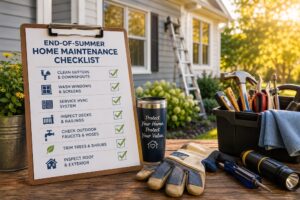
 As summer begins to wind down, homeowners have an excellent opportunity to inspect their property, address seasonal wear, and prepare for the cooler months ahead. Taking care of small maintenance tasks now can prevent expensive repairs later while helping preserve your home’s appearance, efficiency, and overall market value.
Whether you are planning to sell in the near future or simply want to protect your investment, this end-of-summer home maintenance checklist can help keep your property in excellent condition.
- Inspect the Roof for Summer Damage
Summer heat, heavy rain, wind, and storms can take a toll on your roof. Before fall weather arrives, visually inspect the roof for missing, cracked, curled, or damaged shingles. Look for loose flashing around chimneys, skylights, and vents, as these areas are especially vulnerable to water intrusion.
You should also check ceilings and attic spaces for stains, moisture, or signs of a leak. Catching roof problems early can help prevent mold, structural damage, and costly interior repairs. When a closer inspection is needed, consider hiring a qualified roofing professional rather than attempting to climb onto the roof yourself.
- Clean Gutters and Check Downspouts
Leaves, twigs, dirt, and other debris can collect in gutters throughout the summer. Clogged gutters prevent water from draining properly and may cause damage to the roof, siding, landscaping, and foundation.
Clear out accumulated debris and make sure the downspouts direct water several feet away from the home. Check for loose gutter sections, leaks, rust, or areas that appear to sag. Proper drainage is an important part of protecting your property from moisture-related damage during the fall and winter seasons.
- Examine Windows and Exterior Doors
Small gaps around windows and doors can allow air and moisture to enter your home. Inspect the caulking around window frames and replace any sections that are cracked, peeling, or missing. Check exterior doors for damaged weatherstripping, loose hardware, or gaps around the frame.
Sealing these areas can improve energy efficiency, reduce drafts, and help maintain a comfortable indoor temperature. Well-maintained windows and doors can also improve curb appeal, which is especially important when preparing a home for sale.
- Service the Heating System
Your heating system may not have been used for several months, but cooler temperatures can arrive quickly. Scheduling a professional inspection before the start of the heating season gives you time to address potential problems before the system is needed every day.
Replace or clean the HVAC filter, check vents for dust and obstructions, and make sure thermostats are working properly. Regular heating system maintenance can improve efficiency, extend the life of the equipment, and reduce the likelihood of an unexpected breakdown.
- Check the Exterior Paint and Siding
Walk around your property and inspect the siding, trim, shutters, and painted surfaces. Look for peeling paint, cracks, warping, discoloration, mildew, or signs of moisture damage.
Damaged paint is more than a cosmetic concern. Paint and exterior finishes help protect wood and other building materials from water, pests, and weather exposure. Touching up problem areas before temperatures drop may prevent further deterioration and help your home maintain a clean, cared-for appearance.
- Repair Driveways, Walkways, and Patios
Small cracks in concrete, asphalt, or masonry can become larger when water enters and later freezes. Inspect the driveway, walkways, steps, and patio for cracks, loose pavers, uneven surfaces, or crumbling edges.
Sealing cracks and repairing damaged areas can reduce the risk of more serious deterioration. It can also improve safety by minimizing tripping hazards around the property. These repairs may seem minor, but they can make a noticeable difference in how buyers and visitors perceive the condition of a home.
- Trim Trees and Maintain Landscaping
End-of-summer landscaping is not only about appearance. Overgrown branches can scrape against siding, damage roofing materials, block gutters, or fall during severe weather. Trim branches that are too close to the home and remove damaged or unhealthy limbs.
Clear dead plants and weeds from flower beds, refresh mulch where needed, and inspect trees for signs of disease or instability. Attractive landscaping supports curb appeal, while proper tree care can protect the home from preventable damage.
- Look for Signs of Pests
As outdoor temperatures begin to change, insects and rodents may look for shelter inside homes. Inspect the foundation, roofline, garage, basement, and utility entry points for cracks, holes, nests, droppings, or other signs of pest activity.
Seal small openings and repair damaged screens or vents. Firewood, lawn equipment, and outdoor storage should be kept away from the foundation whenever possible. Addressing pest concerns early can help prevent damage to insulation, wiring, wood, and stored belongings.
- Test Safety Devices
Smoke alarms and carbon monoxide detectors should be tested regularly. Replace batteries when necessary and confirm that each device is functioning properly. Check the expiration date on fire extinguishers and make sure they are stored in accessible locations.
You should also review exterior lighting, security cameras, motion sensors, and door locks. These simple checks can help improve safety while giving homeowners greater peace of mind as daylight hours become shorter.
- Prepare Outdoor Features for Cooler Weather
Clean and inspect outdoor furniture, grills, pools, irrigation systems, garden tools, and recreational equipment. Make necessary repairs before placing items into seasonal storage.
Garden hoses should be disconnected when freezing weather approaches, and outdoor faucets may need additional protection depending on the climate. Irrigation systems should also be checked for leaks or damaged sprinkler heads before they are winterized.
- Protect Your Home and Your Investment Consistent maintenance is one of the most effective ways to protect a home’s long-term value. Buyers often notice signs of deferred maintenance, and even small visible issues can create concerns about the overall condition of a property.
Completing end-of-summer home maintenance tasks can help prevent larger repairs, improve energy efficiency, enhance curb appeal, and prepare your home for the seasons ahead. By addressing problems early and keeping accurate records of repairs and professional services, you can protect both the comfort of your home and the value of your real estate investment.
Compliments of Virtual Results


 Catch Our Feed
 Subscribe via Email
 Follow Our Tweets
 Friend Us On Facebook
 Watch Us On Youtube